
How To Clean Dusty Curtains At Home & Office: Step-By-Step Guide
Curtains are an important part of any home interior decor, but it’s also the most overlooked thing during an interior cleaning. The floors, furniture, and windows get cleaned daily, but the curtains stand there, quietly gathering dust, dirt, allergens, and odors. Whether it’s in homes or at the office, these curtains will gradually start to lose their freshness and appearance if you don’t maintain them properly. So, how to clean dusty curtains at home and in offices? Well, today we offer a step by step guide for it.
Why Curtain Cleaning Is Important?
Curtains are like a giant fabric filter for a room. They will absorb the dust, pet hairs, smoke particles, odors from cooking, pollens, and other airborne allergens. When you don’t clean them daily, they start to look dirty, and colors start to fade, resulting in faster wearing.
Our Step By Step Process To Clean Dusty Curtains At Home
This is a simple to follow and proven step-by-step process to clean dusty curtains at home.
Step 1: Check the Curtain Fabric Type
First, you need to identify the type of curtain material because different fabrics will need different cleaning regimes. The most common fabric options are cotton, velvet, linen, silk, and voile. You should always check the washing instructions from the label of the curtain, its water temperature recommendations, and any dry cleaning only warnings.
Step 2: Remove Surface Dust First
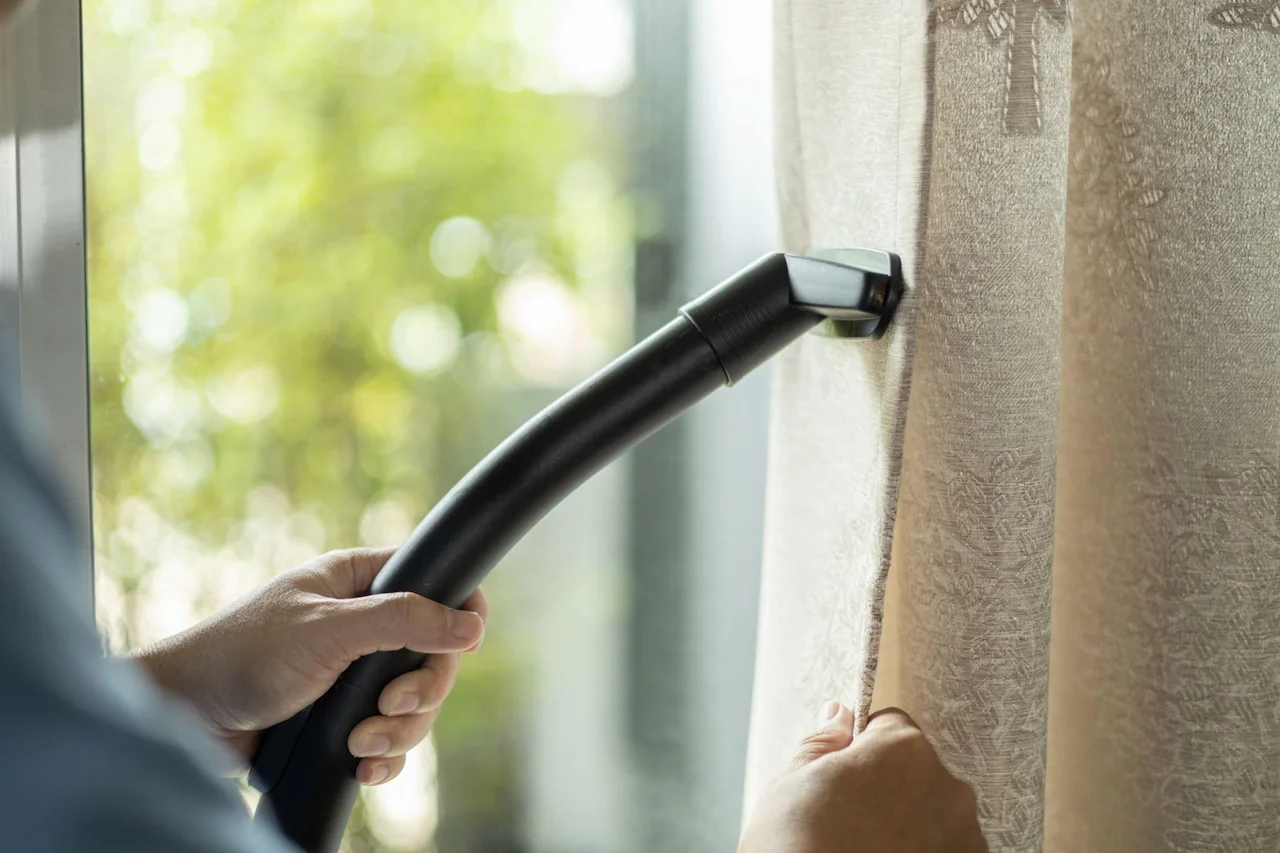
Before you wash or deep clean the curtains, you need to remove the dust from these drapes. The best methods are to vacuum clean it or shake the fabric a little, or simply do a soft brushing. For the vacuum cleaning method, you need to use a soft brush attachment and start from top to bottom. It’s recommended to vacuum from both the front and the back and focus where the dust accumulates the most.
Step 3: Remove Curtains Carefully
You should first take down the curtain carefully to not cause any damage to the curtain rods, hooks, or fabric. You should remove the rings or hooks individually and keep these accessories organized – never pill the fabric forcefully. If these are drapes for offices or any heavy option like blackout curtains, its best to ask another person for help.
Step 4: Decide Between Machine Washing & Hand Washing
The right washing method depends on the fabric type.
1. Machine-Washing Curtains
Machine washing works best for options like polyester curtains, cotton curtains, and lightweight synthetic fabrics. You need to put them on a gentle spin cycle with cold or lukewarm water. Add a mild detergent and do not use any bleach as well as not overload the machine.
2. Hand Washing Curtains
Hand washing is safer for options like linen curtains, delicate fabric, sheer curtains, and decorative curtains. You should fill the machine tub with lukewarm water and pour some mild detergent. Let the curtains soak softly and swirl the fabric. It’s best not to scrub these curtains and rinse them thoroughly afterwards.
Step 5: Handle Stains Properly
Dust is not the only issue that these curtains face. They suffer from stains of smoke, food, pets, or moisture. If it’s mild stains, you need to use a mild detergent or spot clean the fabric with a soft, clean cloth. In case of grease stains, you need to apply the fabric-safe stain remover and never use any harsh chemicals. If you are dealing with mold or mildew, you should use the vinegar-water solution and let the drapes dry completely.
Step 6: Dry Curtains Correctly
An improper wash can lead to wrinkles in your curtains or cause the fabric to shrink. The best way to dry your curtains is to air dry them, hang them while they are damp, or set the dryer at low-heat tumble dry.
Step 7: Remove Wrinkles After Cleaning
Curtains will develop wrinkles right after you wash them. The best way to remove those wrinkles is to steam clean them, use a steamer for garments, do low-heat ironing, or hang them while they are a little damp. Steamers are a great choice for sheer curtains, blackout drapes, and linen options.
Step 8: Clean Curtain Rods & Hardware
While you clean the curtains, it’s also a necessity to clean the accessories and hardware. This will include curtain rings, rods, brackets, hooks, and curtain tracks. Dust tends to accumulate on this hardware, and you can clean it by wiping with a damp microfiber cloth and a dry towel after it.
Final Thoughts
Curtains are certainly a major part of any home’s or office’s interior decor theme. The time can take a toll on a curtain’s freshness with dust and dirt gathering on it. You need to employ a proper cleaning and maintenance regime to keep your drapes looking their best. This step-by-step guide on how to clean dusty curtains at home or the office will certainly make it easier to do so. A consistent cleaning and maintenance routine will improve your curtains, along with making the space look clean, soft, and visually pleasing.